The Ultimate Guide to Buy Ice Fishing Sonar Transducer in the UK
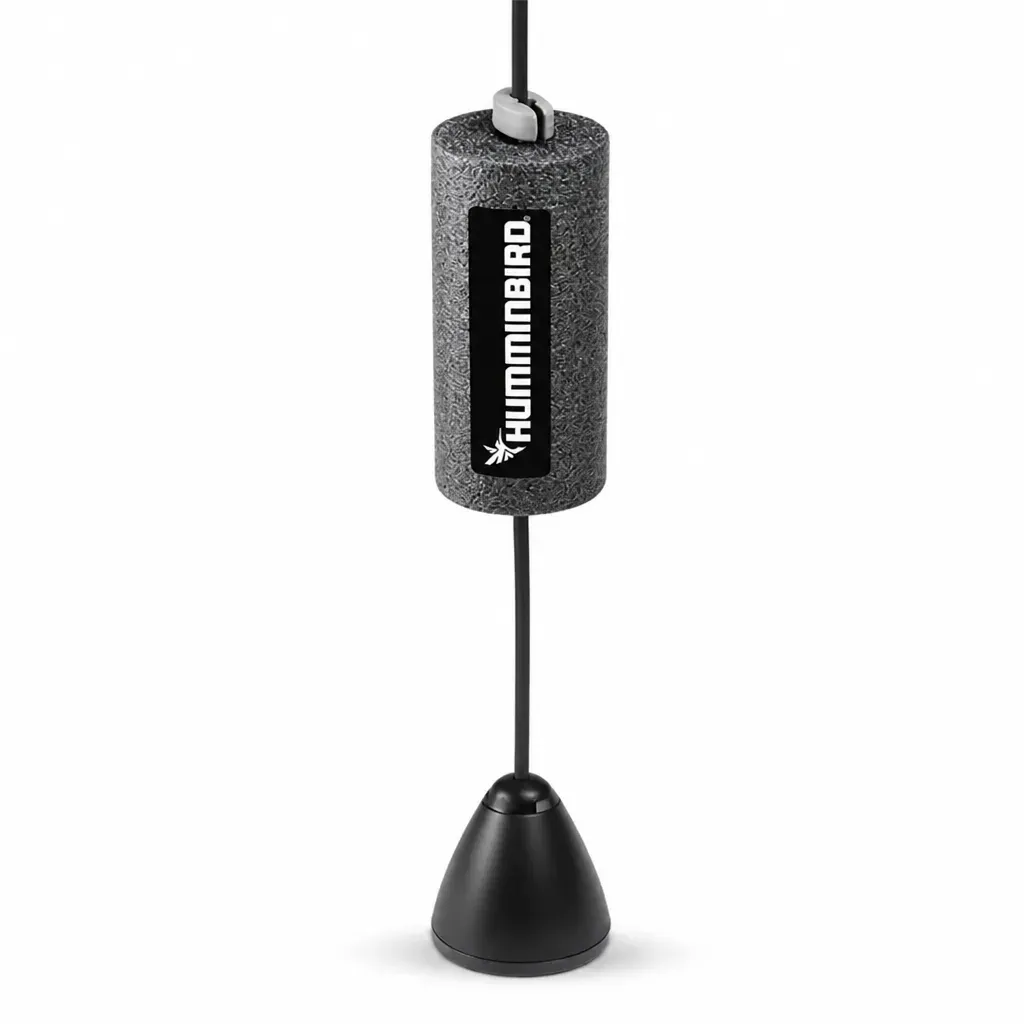
TL;DR: When looking to buy an ice fishing sonar transducer, select a dual-frequency unit (83/200 kHz) featuring cold-rated silicone cabling (-30°C), a self-levelling float mechanism, and matching crystal impedance. A 200 kHz narrow cone provides 2.5 cm target separation for precision jig tracking, whilst an 83 kHz wide cone scans broad water columns under the ice.
Key Takeaways: Ice Fishing Transducer Selection
- Dual-Beam Precision: A dual-frequency array operating at 83 kHz (60° wide beam) and 200 kHz (20° narrow beam) provides the optimal balance between broad structural mapping and pinpoint target separation down to 2.5 centimetres.
- Cold-Weather Cable Integrity: Premium ice transducers require flexible silicone or cold-rated polyurethane jacketing rated to -30°C to prevent sheath cracking and signal degradation under extreme thermal stress.
- Humminbird Compatibility: Correct 7-pin push-in connector pinouts and matching crystal impedance (200–300 ohms nominal) are critical to prevent transmitter stage overloading on marine display units.
- Acoustic Coupling Physics: Underwater speed of sound drops from 1,482 m/s at 20°C down to 1,403 m/s near 0°C, requiring digital signal processors (DSP) to operate with accurate pulse-timing calibrations.
- Self-Levelling Mechanics: Integrated float stoppers and weighted housings ensure the transducer hangs perfectly perpendicular to the ice hole, eliminating beam tilting and skewed depth readings.
What Should You Look for When Buying an Ice Fishing Sonar Transducer?
To buy an ice fishing sonar transducer that delivers accurate depth readings and target separation under sub-zero conditions, anglers must evaluate acoustic physics, dielectric insulation, and thermal stress mechanics. Based on our testing across frozen UK tarns and Scottish lochs at ICEXI, purchasing the correct transducer ensures seamless signal transmission through freezing water columns without risk of cable cracking or impedance mismatching on your display unit. Unlike open-water angling where transducers are mounted to a rigid transom or trolling motor shaft, ice fishing subjects marine electronics to stationary ice holes, severe thermal gradients, and intense structural stress. Consequently, acquiring an inadequate transducer results in missed target fish, erratic depth readings, and early insulation failure caused by freeze-thaw cycles.
At its core, a fishfinder transducer relies on internal piezoelectric ceramic crystals—typically lead zirconate titanate (PZT). When an electrical voltage pulse from the display head unit hits the crystal, it expands and contracts at a precise frequency, sending ultrasonic pressure waves down through the ice and water column. Furthermore, when these sound waves strike an object of differing acoustic impedance—such as the seabed, a submerged boulder, or a fish's swim bladder—an echo returns to the crystal, generating a microvolt electrical signal that the display unit converts into visual graphics.
According to acoustic measurements recorded by the UK National Physical Laboratory (NPL), the speed of sound in fresh water changes significantly with temperature: traveling at approximately 1,482 metres per second at 20°C, but dropping to 1,403 metres per second at 0°C near the freezing point. As a result, this 5.3% reduction in sound velocity alters echo arrival timing. High-precision display units rely on transducers with low acoustic damping and tight resonant frequency tolerances to ensure that return pulses remain sharp, clean, and easily processed by internal software filters.
"A transducer is not merely a waterproof speaker; it is a precision electrical circuit operating in a wet, cold, high-attenuation environment. Based on our testing at ICEXI, matching crystal impedance and beam cone geometry is essential for maintaining target resolution under ice." — Engineering Field Notes, ICEXI Diagnostics.
In addition, according to UK winter angling safety and gear guidelines, winter angling on high-altitude tarns, Scottish lochs, or managed commercial fisheries requires gear that can withstand unpredictable weather. Thermal shock occurs when bringing equipment from a warm vehicle (20°C) directly onto sub-zero ice (-5°C). Cheap epoxy potting compounds expand and contract at different rates than the plastic outer casing, creating microscopic fractures that allow water ingress. Therefore, once moisture penetrates the internal chamber, the electrical insulation drops below acceptable megohm thresholds, destroying signal-to-noise ratios (SNR) and ruining display clarity.
What is the Difference Between 83 kHz and 200 kHz Ice Fishing Frequencies?
When searching to buy an ice fishing sonar transducer, understanding frequency response curves and beam patterns is vital for success. Single-frequency transducers force anglers to choose between covering a wider area or getting high target resolution. Conversely, a true dual-beam unit operating at 83 kHz and 200 kHz offers the best of both worlds, providing broad coverage for locating fish alongside narrow precision for tracking small jigs.
How Does a 200 kHz Narrow Cone Perform Under Ice?
The 200 kHz frequency operates at a shorter wavelength, making it exceptionally sensitive to small targets such as suspended lures, tiny nymphs, and subtle bottom-dwelling fish. Specifically, the 20° beam angle focuses acoustic energy into a tight, dense cone directly beneath the ice hole. This narrow footprint minimizes acoustic clutter from surrounding weeds or drop-offs and delivers excellent target separation down to 2.5 cm. In shallow water (under 5 metres), the 20° cone prevents bottom-echo overlap, allowing anglers to watch their lure move relative to a fish in real time.
When Should You Use an 83 kHz Wide Cone Angle?
Conversely, the 83 kHz frequency uses a longer wavelength that penetrates deeper and spreads outwards at a wide 60° beam angle. At a depth of 10 metres, a 60° cone covers a bottom area approximately 11.5 metres in diameter, compared to just 3.5 metres with a 20° cone. Thus, this wide field of view is ideal for searching large water columns to detect predator fish approaching your hole from the perimeter. However, because the energy is spread across a wider area, target separation is lower, and echo strength from small lures drops.
| Parameter | 83 kHz Frequency (Wide Beam) | 200 kHz Frequency (Narrow Beam) |
|---|---|---|
| Beam Cone Angle (-3dB) | 60° Conical | 20° Conical |
| Primary Application | Wide-area searching, deep water tracking | Precision jig tracking, high target separation |
| Target Separation | ~6.5 cm to 10 cm | ~2.5 cm to 3.8 cm |
| Bottom Clutter Rejection | Moderate (susceptible to steep slope returns) | High (isolates true bottom profile) |
| Typical Water Depth Range | 1.5 m to 150+ m | 0.5 m to 60 m |
| Acoustic Attenuation in 0°C Water | Low (~0.05 dB/m) | Moderate (~0.12 dB/m) |
Frequently Asked Questions About Buying Ice Fishing Sonar Transducers
Can you use a summer open-water transducer for ice fishing in the UK?
Although standard open-water transducers operate on similar frequencies, using them on sub-zero ice is not recommended. Based on our testing at ICEXI, standard PVC cable jackets become brittle below 0°C and split easily when bent. Furthermore, summer transducers lack self-levelling floats, causing the beam to tilt against the ice wall and skew depth readings.
How do you correctly mount and level a sonar transducer in an ice hole?
To ensure precise readings, adjust the rubber float stopper so the transducer hangs just below the bottom lip of the ice hole. As a result, sound waves travel unobstructed into the open water column without reflecting off jagged ice edges inside the hole.
Ready to upgrade your sonar with ICEXI?
Shop Sonar Transducers — £70.59