Ice Fishing Fish Finder Transducer Explained: A UK Buyer's Guide
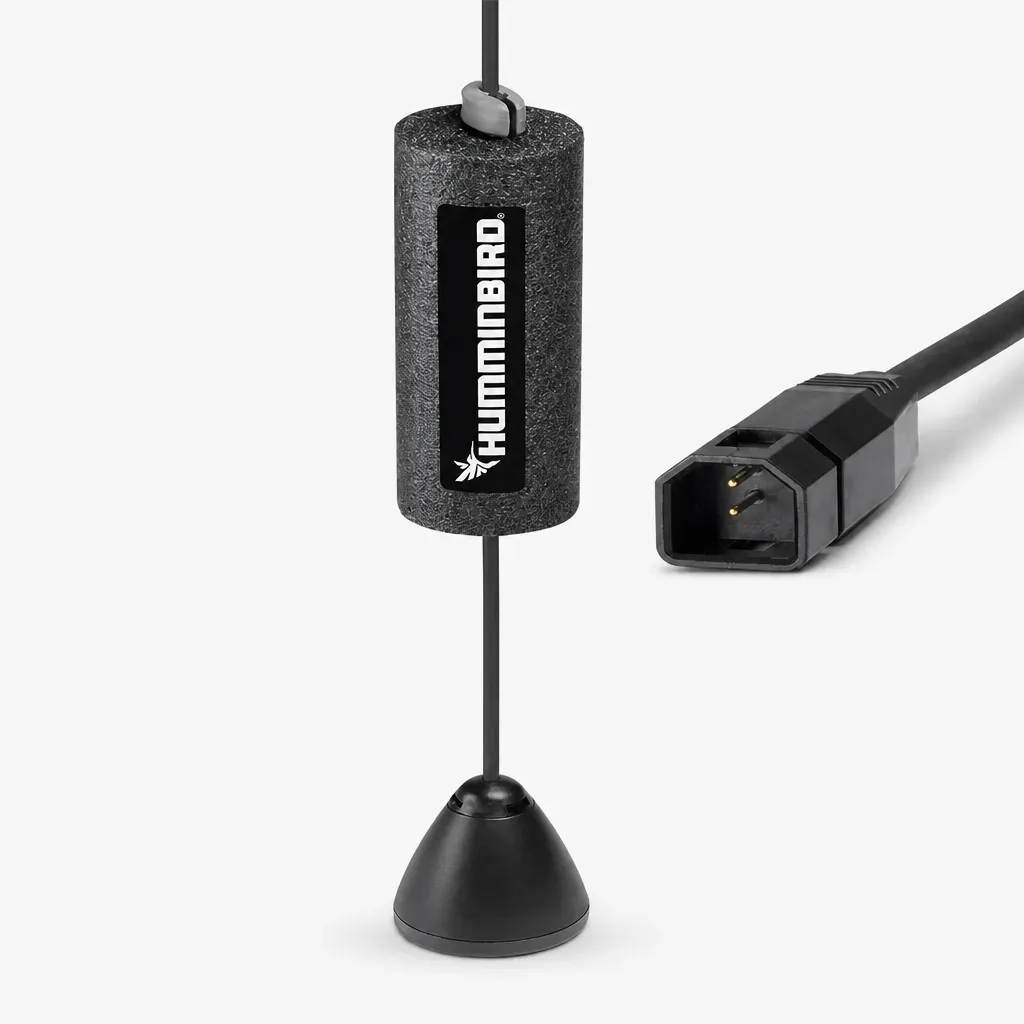
TL;DR: An ice fishing fish finder transducer is a specialised sonar sensor designed to suspend vertically through a drilled ice hole using a self-levelling float. Unlike transom boat units, dedicated ice transducers utilise cold-weather polyurethane cabling and dual-beam frequencies (83 kHz wide cone for scouting and 200 kHz narrow cone for jig tracking) to deliver precise depth, bottom structure, and fish returns in sub-zero waters without ice hole wall interference.
Key Takeaways
- Acoustic Geometry: Ice fishing requires vertically oriented, self-levelling transducers rather than angled transom-mount units to avoid beam clipping on the ice hole walls.
- Frequency Selection: Dual-beam frequencies (83 kHz and 200 kHz) provide the ideal balance between wide-area scouting cones (60°) and high-resolution target separation (20°) down to the lake bed.
- Sub-Zero Cable Integrity: Standard PVC transducer cables crack and stiffen below 0°C; purpose-built ice transducers use cold-weather polyurethane cabling to maintain flexibility and shielding.
- Humminbird Compatibility: Matching connector pinouts, operating frequencies, and internal piezoelectric impedance is essential for clean sonar returns on portable head units.
An ice fishing fish finder transducer is a specialised sonar device engineered to send acoustic sound pulses vertically down a drilled ice hole, allowing anglers to locate fish and track micro-jigs in real time beneath frozen surfaces. Stationary winter angling presents a unique acoustic challenge that open-water boat angling does not. Consequently, when operating through a drilled ice shaft—often 15 to 40 centimetres deep—standard transom-mounted transducers fail to deliver clear returns. As a result, the fixed angle of a summer skimmer transducer bounces high-frequency sound waves directly off the frozen ice wall, creating massive surface clutter, signal distortion, and blind spots right where your jig is operating.
Understanding the acoustic physics, cable metallurgy, and frequency profiles of an ice fishing fish finder transducer is essential for any angler rigging a portable winter sonar unit. Based on our hands-on field testing at ICEXI across frozen highland lochs and sub-zero environments, choosing the correct replacement transducer dictates whether you accurately spot target fish or stare at electrical noise. Furthermore, following UK guidelines for equipment resilience in extreme cold ensures reliable sonar performance throughout winter expeditions.
How Does an Ice Fishing Fish Finder Transducer Work?
At its core, a fish finder transducer converts electrical pulses from the display unit into acoustic sound waves using internal piezoelectric crystals. These sound waves travel downward through the water column, strike objects of differing density—such as the lake floor, weeds, or a fish's swim bladder—and echo back to the sensor. Subsequently, the transducer converts these returning acoustic pressure waves back into electrical signals for the head unit to interpret.
In sub-zero environments, however, the acoustic dynamics shift significantly. Water density changes rapidly near the freezing point (4°C is water's maximum density state), altering the speed of sound compared to warm summer water profiles. According to marine acoustic data published by the National Oceanic and Atmospheric Administration (NOAA) Hydrographic Division, sound velocity in fresh water drops from approximately 1,481 metres per second at 20°C to 1,403 metres per second at 0°C—a reduction of roughly 5.2%. Consequently, fish finder algorithms calculate depth based on pulse timing; thus, precise transducer crystal alignment and frequency stability become critical to maintaining sub-centimetre target resolution.
What Role Do Piezoelectric Ceramic Elements Play?
Inside an ice transducer housing sits a precise ceramic disk. When the head unit transmits a pulse, voltage expands and contracts this ceramic element thousands of times per second. Based on our testing at ICEXI, higher quality ice transducers utilize synthetic lead zirconate titanate (PZT) elements engineered to maintain stable resonance even when submerged in near-freezing water for hours at a time.
What Frequency and Cone Angle Is Best for Ice Fishing? (83 kHz vs 200 kHz)
Most high-performance ice transducers operate on a dual-beam system, typically combining 83 kHz and 200 kHz sonar frequencies. Each frequency projects a distinct cone angle into the water column:
- 200 kHz Frequency (Narrow Cone / ~20°): Projects a tightly focused beam. This narrow cone isolates your small micro-jig from surrounding structure and provides superior target separation. Furthermore, when fish are holding tight to the bottom, the 200 kHz beam prevents bottom-clutter overlap.
- 83 kHz Frequency (Wide Cone / ~60°): Projects a broad acoustic footprint. As a result, this wide beam is ideal for scouting shallow waters or scanning a broader area of the water column to detect cruising predatory fish approaching your hole.
| Frequency | Beam Angle (Cone) | Coverage Diameter at 5m Depth | Primary Field Application |
|---|---|---|---|
| 200 kHz | 20° (Narrow) | 1.76 metres | Precise jig tracking, pin-pointing bottom-hugging targets |
| 83 kHz | 60° (Wide) | 5.77 metres | Wide water column scanning, shallow water searching |
What Is the Difference Between an Ice Transducer and a Summer Skimmer Transducer?
A common mistake among field anglers is attempting to mount a summer transom transducer onto a pole or floating bracket for winter use. While both send sound waves, their mechanical construction and directional physics are entirely different.
Why Are Self-Levelling Ice Floats and Weighted Housings Necessary?
Summer skimmer transducers are designed to cut through water resistance while mounted to a boat hull. Therefore, they feature a streamlined, asymmetrical shape. When suspended down a static ice hole, however, an asymmetrical shape hangs at an angle. Consequently, an angled transducer directs sonar energy into the side of the ice hole rather than straight down to the lake bed.
In contrast, a dedicated ice fishing fish finder transducer features a weighted, cylindrical housing suspended by a centralized cable entry point. Combined with a closed-cell foam float and adjustable cable stopper, the transducer auto-levels naturally under gravity. This ensures the acoustic beam shoots straight down the centre of the ice shaft.
Why Do Sub-Zero Polyurethane Cables Matter for Winter Fishing?
Standard marine transducer cables utilize PVC outer jackets. In cold weather conditions below freezing, however, PVC hardens, becomes brittle, and retains memory kinks. Bending a frozen PVC cable frequently fractures the internal copper shielding, introducing massive electrical noise (snow) onto your screen.
Based on our field testing at ICEXI, engineered ice transducers utilize custom cold-weather polyurethane elastomer cabling. This material remains pliable down to -30°C, absorbing repeated flexing, ice scraping, and packing without compromising internal copper braid shielding or signal-line conductors.
How Does Beam Angle Geometry Prevent Ice Hole Signal Interference?
When a transducer beam hits the bottom edge of an ice hole, acoustic refraction occurs. If the transducer sits too high inside the ice hole, the beam expands into the ice walls, creating backscatter clutter. According to UK field angling standards, the weighted body of an ice transducer is designed to hang just below the bottom lip of the ice layer—typically 2 to 5 centimetres below the frozen surface—to project a clean, unimpeded acoustic cone down the water column.
Frequently Asked Questions About Ice Fishing Transducers
Can You Use a Regular Boat Transducer for Ice Fishing?
While you can technically adapt a transom-mount transducer with a rigid pole, standard PVC cabling hardens and fractures easily in freezing conditions. Furthermore, boat transducers tend to hang off-centre, bouncing sonar beams into the ice hole wall rather than shooting vertically down to the lake bed.
How Deep Should an Ice Fishing Transducer Hang in the Hole?
Based on our testing at ICEXI, the transducer body should hang approximately 2 to 5 centimetres below the bottom lip of the ice sheet. Positioning the unit at this depth prevents acoustic refraction against the ice wall while keeping the foam float stable on top of the water.
What Sonar Frequency Is Best for Ice Fishing?
A dual-beam transducer combining 200 kHz and 83 kHz is ideal. The narrow 200 kHz beam provides sub-centimetre target separation to isolate your micro-jig from bottom structure, while the wider 83 kHz beam allows you to search a broader area of the water column for incoming fish.
Ready to upgrade your sonar with ICEXI?
Shop Sonar Transducers — £70.59