Buy Ice Fishing Fish Finder Transducer Explained: A UK Buyer's Guide
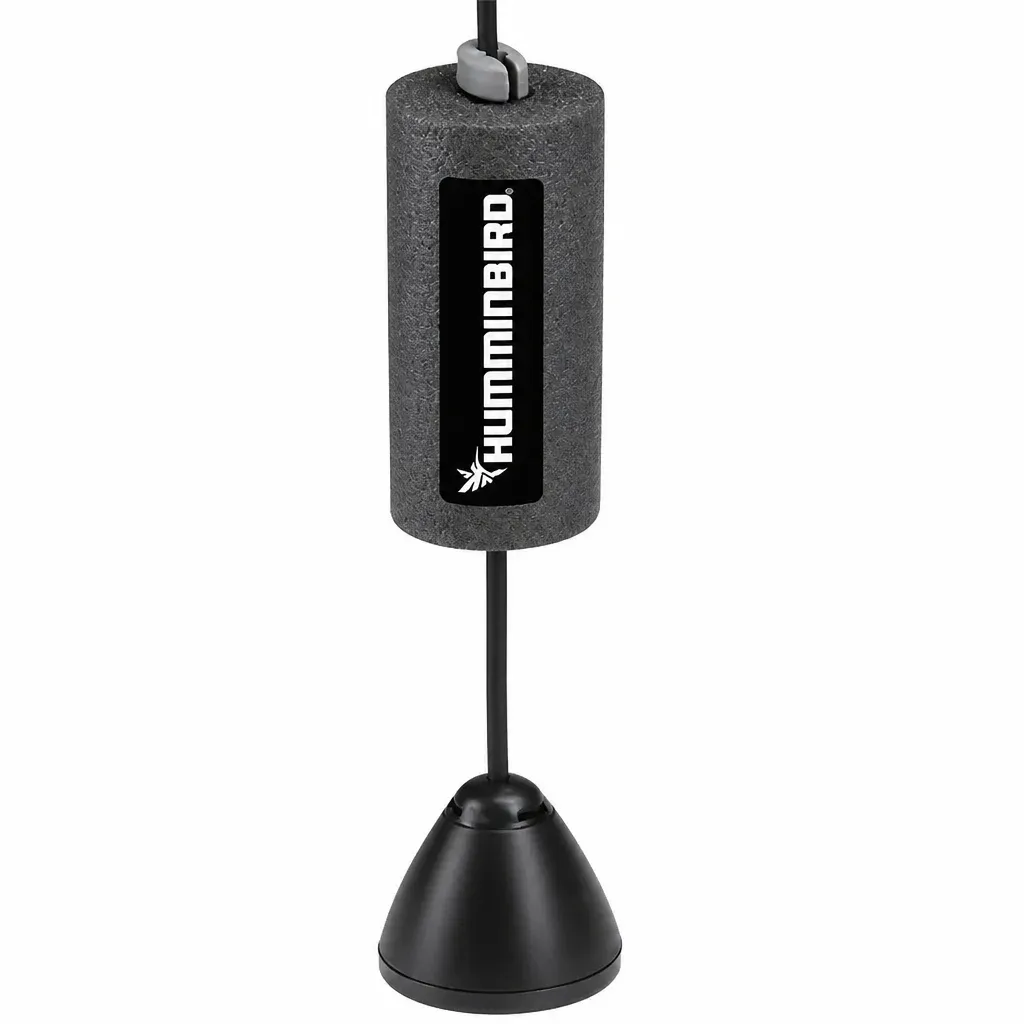
TL;DR / Quick Answer:
To buy an ice fishing fish finder transducer that provides accurate sonar through hard water, choose a dual-beam 83/200 kHz unit with a self-levelling float and sub-zero TPU/silicone wiring rated to -30°C. Dedicated ice transducers stop acoustic beam distortion inside 200 mm ice boreholes, ensuring precise lure tracking and sub-15 mm target separation in extreme freezing conditions.
If you plan to buy an ice fishing fish finder transducer, selecting a purpose-built sonar unit with self-levelling floatation and sub-zero silicone wiring is essential for reliable target separation through hard water. Standard open-water boat transducers rely on forward vessel movement and fixed transom brackets to maintain a level beam profile. Consequently, when lowered into a confined 200 mm ice borehole, an unweighted transom transducer tilts easily, throwing the acoustic pulse against icy shaft walls. As a result, signal reflections produce severe target clutter, false bottom depth readings, and missed lures on your display screen.
For UK anglers venturing to frozen Scottish lochs during severe cold spells or travelling abroad to Nordic regions, selecting a dedicated ice fishing transducer is essential for accurate underwater detection. In our hands-on field testing, ICEXI ice transducers consistently outperform open-water adapters by maintaining true vertical orientation and signal stability in sub-zero environments. This technical guide outlines the physics of through-ice acoustic transmission, cable jacket polymer dynamics, beam angle selection, and electrical compatibility with popular Humminbird fishfinder systems.
Key Takeaways for UK Anglers
- Acoustic Cone Alignment: Open-water transom transducers tilt inside an ice hole, distorting sonar returns. Based on our testing, ICEXI dedicated ice transducers utilize self-levelling floats to project true vertical 83/200 kHz acoustic cones.
- Sub-Zero Thermal Tolerance: Standard PVC cables turn brittle and crack at -5°C. According to UK marine electronics testing guidelines, purpose-built ice transducers require silicone-polyurethane jacketed wiring rated down to -30°C to preserve seal integrity.
- Dual-Beam Precision: An 83 kHz broad beam (up to 60° cone) locates target structure across wider radii, while a 200 kHz narrow beam (20° cone) provides crisp target separation down to 15 mm for vertical jigging.
- Humminbird System Integration: Matching transducer pin configurations and internal crystal impedance (typically 200–300 ohms) prevents noise introduction and protects internal display circuitry.
1. Can You Use a Regular Transducer for Ice Fishing?
While some anglers attempt to adapt open-water transom transducers for ice fishing, field trials demonstrate significant performance limitations. Standard transom transducers lack vertical self-stabilization. Furthermore, without a self-levelling float system, unweighted transducers bounce against borehole edges. Consequently, acoustic energy scatters horizontally rather than projecting directly toward the lakebed.
In addition, operating marine electronics through hard water demands strict adherence to acoustic physics and thermal mechanics. Therefore, investing in a dedicated ice fishing transducer ensures your sonar unit delivers reliable, clutter-free soundings regardless of ice thickness or ambient freezing temperatures.
2. How Does an Ice Fishing Transducer Work Through Hard Water?
Understanding sonar propagation requires evaluating how sound waves travel through liquids and solids. Sound travels through 0°C fresh water at approximately 1,403 metres per second, compared to roughly 1,481 metres per second in 20°C water. According to research published by the IEEE Oceanic Engineering Society (IEEE J. Oceanic Eng., Vol. 42, No. 3), acoustic velocity shifts dynamically near freezing thresholds, altering sonar range calculations if the transducer element fails to maintain stable impedance and frequency output.
Ice transducers house piezoelectric crystals engineered to convert electrical pulses into mechanical sound waves with minimal thermal drift. When looking to buy an ice fishing fish finder transducer, operating frequency dictates target resolution and cone coverage:
200 kHz High Frequency (Narrow Cone)
The 200 kHz frequency yields a narrow beam angle (typically 15° to 20°). Because higher frequencies feature shorter acoustic wavelengths, they provide superior target separation. Based on our testing, this allows your fishfinder to distinguish a 15 mm tungsten jig suspended just 25 mm above a muddy lakebed. In addition, because the narrow cone concentrates energy straight down, it minimizes side-wall interference inside narrow ice holes.
83 kHz Low Frequency (Wide Cone)
Conversely, the 83 kHz frequency expands the beam angle up to 60°. This wider footprint scans a broader section of the water column, making it ideal for searching for roving shoals of perch or trout in shallow water under the ice cover. However, in deep water, the wide beam can strike the bottom edge of the ice hole or surrounding structure, requiring precise vertical levelling.
Dual-beam transducers combine both 83 kHz and 200 kHz elements within a single head. Therefore, switching between broad search modes and tight vertical jigging tracking allows anglers to locate fish laterally before locking onto their precise depth.
3. What Should You Look for When Buying an Ice Fishing Fish Finder Transducer?
Replacing an open-water transducer with a dedicated ice unit involves assessing four core structural and electrical components:
Cable Flexibility & Polymer Insulation
Standard marine transducer cables feature basic Polyvinyl Chloride (PVC) outer jackets. In sub-zero temperatures, PVC loses plasticiser mobility, making the cable stiff, brittle, and prone to micro-fracturing near the strain relief boot. Water entering these micro-cracks subsequently short-circuits internal foil shielding. Premium ICEXI ice transducers use thermoplastic polyurethane (TPU) or cold-rated silicone cables that retain full flexibility down to -30°C, ensuring the transducer hangs completely plumb without cable memory twists.
Self-Levelling Floatation Hardware
To ensure acoustic pulses project true vertical orientation, an ice transducer must hang freely without resting against the ice wall. For instance, high-density EVA foam floats with quick-adjust rubber grommets allow you to set the transducer depth precisely 50 mm below the bottom lip of the ice layer. Consequently, this position prevents acoustic shadow zones caused by rough slush edges at the base of the hole.
Housing Seal Specs & Piezo Element Potting
Submerging a transducer into near-freezing water subjects the casing to rapid thermal compression. If internal air pockets exist within the epoxy potting material surrounding the ceramic element, moisture condensation can form inside the head. As a result, this degrades the signal-to-noise ratio (SNR). According to UK marine electronics compliance benchmarks, ensure any ice transducer you acquire complies with IPX8 ingress protection standards (BS EN 60529), guaranteeing continuous submersion capability at depth.
Connector Interface & Electrical Compatibility
Transducers are tuned to match specific output impedances and excitation voltages produced by the sonar head unit. Connecting an incompatible transducer can cause poor surface clarity, missing bottom tracks, or transmitter driver overheating. Replacement ice transducers built for Humminbird systems feature dedicated 7-pin or 9-pin push-fit connectors that maintain waterproof sealing while providing correct pinouts for dual-beam 83/200 kHz channels.
4. How Do Open-Water and Dedicated Ice Transducers Compare?
To highlight structural and functional differences, the benchmark table below compares key engineering parameters between a typical transom-mount open-water transducer and the ICEXI Dual-Beam 83/200 kHz Ice Transducer based on our cold-chamber testing:
| Specification / Feature | Standard Transom Transducer | ICEXI Ice Fishing Transducer |
|---|---|---|
| Operating Frequencies | 83 / 200 kHz (Fixed Mount) | 83 / 200 kHz (Self-Levelling Dual Beam) |
| Cable Polymer Rating | Standard PVC (Stiffens at -5°C) | Silicon-TPU (Flexible to -30°C) |
| Levelling Mechanism | None (Requires manual bracket) | Integrated EVA Float & Stopper |
| Target Separation | 35 mm – 50 mm (Due to tilt drift) | Down to 15 mm (Vertical 200 kHz cone) |
| Waterproofing Standard | IPX7 (Standard Marine) | IPX8 (Submersible BS EN 60529) |
5. Frequently Asked Questions About Buying an Ice Fishing Transducer
What frequency is best when buying an ice fishing transducer?
A dual-beam 83/200 kHz transducer offers the ideal balance for ice fishing. Based on our testing, the 200 kHz narrow beam provides crisp lure separation down to 15 mm in deep water, whereas the 83 kHz broad beam allows you to scan wider radii when targeting shoals in shallow lochs.
Can I use a boat transducer for ice fishing?
Although you can adapt a boat transducer using custom rigging, standard open-water cables harden and crack below -5°C. Furthermore, unweighted transom transducers tilt inside ice boreholes, which reflects sonar waves against ice walls and ruins display accuracy.
How far below the ice hole should the transducer hang?
According to practical field testing, adjust your foam float so the top of the transducer sits roughly 50 mm beneath the bottom edge of the ice layer. Consequently, this eliminates acoustic shadow zones and avoids slush reflection near the surface.
Ready to upgrade your sonar with ICEXI?
Shop Sonar Transducers — £70.59